
,fit=pad/contentassets/8c25a81873f3447490ffdc9d9b53f5f5/kito_black.png)
,fit=pad/contentassets/df70ce6ebb1e45bda867f458ffed9e71/harrington_color-logo_light-background_crop.png)
,fit=pad/globalassets/logos/stahl/new-by-cmco/stahl_color-10.11.svg)
,fit=pad/globalassets/logos/yale/new/yale-10.11.svg)
,fit=pad/contentassets/1f4eac3541654db5a396d6c67f7ce0fb/crosby_red_rgb.png)
,fit=pad/contentassets/aa99b2f703284295af4814e40a22bbfc/gunnebo-industries_color-logo_crop.png)
,fit=pad/contentassets/5cd5182b5c724d6199ff77c450920a56/eepos-logo2025_eeblue_crop.png)
,fit=pad/globalassets/logos/magnetek/new/magnetek_wide_color-10.11.svg)
,fit=pad/globalassets/logos/dorner/new/dorner_color-10.11.svg)
,fit=pad/globalassets/logos/montratec/montrac-logo.png)
,fit=pad/globalassets/logos/pfaff/pfaff_color_cmyk_new.png)
,fit=pad/globalassets/logos/duff-norton/new/duff-norton_color-10.11.svg)
,fit=pad/globalassets/logos/garvey/new/garvey_color-10.11.svg)
,fit=pad/contentassets/1be5ec1cbb8e442392f10efd8b5b95a0/2-peerless_color-logo_light-background-crop.png)
,fit=pad/globalassets/logos/cm/new/cm_color-10.11.svg)
,fit=pad/globalassets/logos/acco_color-logo.png)
,fit=pad/globalassets/logos/shaw-box/new/shaw-box_color-10.11.svg)
,fit=pad/globalassets/logos/unified/new/unified_color-10.11.svg)
,fit=pad/globalassets/logos/little-mule/new/little_mule_color-10.11.svg)
,fit=pad/contentassets/b2b82ee821bd43ababced737cb426315/erikkila-only_color-logo_all-black_crop.png)
,fit=pad/globalassets/logos/steerman/new/steerman_color-10.11.svg)
,fit=pad/globalassets/logos/dixie/new/dixie_industries_color-10.11.svg)
,fit=pad/globalassets/brand-landing-pages/airpes/crosby-airpes-logo-2023-tall-web.png)
,fit=pad/globalassets/brand-landing-pages/van-leusden/van-leusden-logo.png)
,fit=pad/globalassets/logos/camlok/new/camlok-10.11.svg)
,fit=pad/globalassets/logos/nutting_color-logo.png)
,fit=pad/globalassets/logos/speedbinders/speedbinders_color-logo.png)
,fit=pad/globalassets/logos/scc/scc-logo3.png)
 North America - EN
,fit=pad/contentassets/8c25a81873f3447490ffdc9d9b53f5f5/kito_black.png)
,fit=pad/contentassets/df70ce6ebb1e45bda867f458ffed9e71/harrington_color-logo_light-background_crop.png)
,fit=pad/globalassets/logos/stahl/new-by-cmco/stahl_color-10.11.svg)
,fit=pad/globalassets/logos/yale/new/yale-10.11.svg)
,fit=pad/contentassets/1f4eac3541654db5a396d6c67f7ce0fb/crosby_red_rgb.png)
,fit=pad/contentassets/aa99b2f703284295af4814e40a22bbfc/gunnebo-industries_color-logo_crop.png)
,fit=pad/contentassets/5cd5182b5c724d6199ff77c450920a56/eepos-logo2025_eeblue_crop.png)
,fit=pad/globalassets/logos/magnetek/new/magnetek_wide_color-10.11.svg)
,fit=pad/globalassets/logos/dorner/new/dorner_color-10.11.svg)
,fit=pad/globalassets/logos/montratec/montrac-logo.png)
,fit=pad/globalassets/logos/pfaff/pfaff_color_cmyk_new.png)
,fit=pad/globalassets/logos/duff-norton/new/duff-norton_color-10.11.svg)
,fit=pad/globalassets/logos/garvey/new/garvey_color-10.11.svg)
,fit=pad/contentassets/1be5ec1cbb8e442392f10efd8b5b95a0/2-peerless_color-logo_light-background-crop.png)
,fit=pad/globalassets/logos/cm/new/cm_color-10.11.svg)
,fit=pad/globalassets/logos/acco_color-logo.png)
,fit=pad/globalassets/logos/shaw-box/new/shaw-box_color-10.11.svg)
,fit=pad/globalassets/logos/unified/new/unified_color-10.11.svg)
,fit=pad/globalassets/logos/little-mule/new/little_mule_color-10.11.svg)
,fit=pad/contentassets/b2b82ee821bd43ababced737cb426315/erikkila-only_color-logo_all-black_crop.png)
,fit=pad/globalassets/logos/steerman/new/steerman_color-10.11.svg)
,fit=pad/globalassets/logos/dixie/new/dixie_industries_color-10.11.svg)
,fit=pad/globalassets/brand-landing-pages/airpes/crosby-airpes-logo-2023-tall-web.png)
,fit=pad/globalassets/brand-landing-pages/van-leusden/van-leusden-logo.png)
,fit=pad/globalassets/logos/camlok/new/camlok-10.11.svg)
,fit=pad/globalassets/logos/nutting_color-logo.png)
,fit=pad/globalassets/logos/speedbinders/speedbinders_color-logo.png)
,fit=pad/globalassets/logos/scc/scc-logo3.png)
,fit=cover/globalassets/industries/metals-production/wadesboro-photo-january-2026-123.jpg)
From Heat to High Value: Intelligent Motion Across the Metals Manufacturing Process
By Columbus McKinnon | Apr 20, 2026
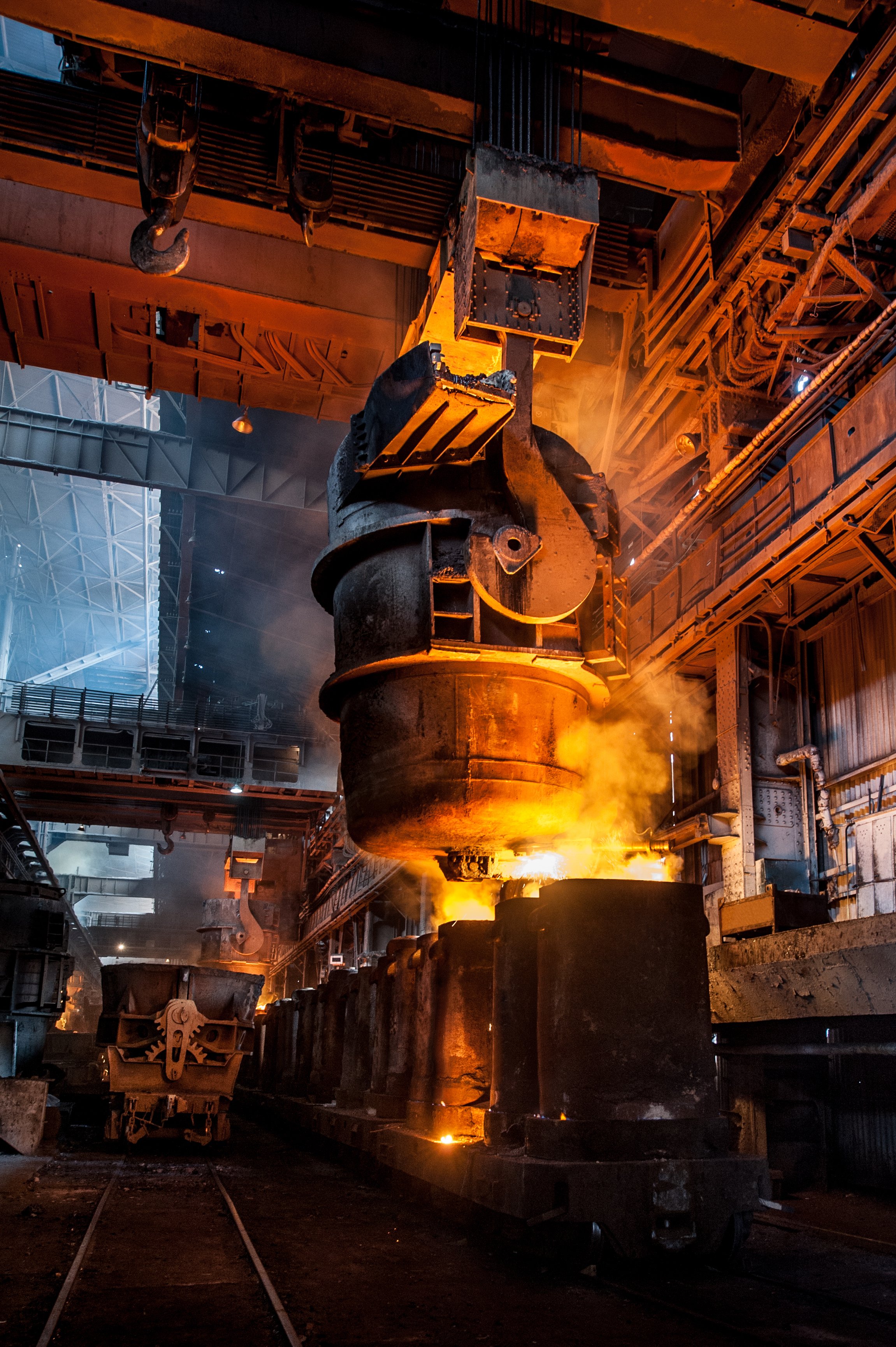 Picture a ladle of molten steel suspended overhead, glowing red hot at nearly 2,800°F as it crosses a crane bay. Then a slight sway. A delayed brake response. In this environment, small errors can result in serious consequences.
That is metals manufacturing.
From scrap yard to shipping dock, the way materials move through a facility determines whether production runs with control or absorbs preventable disruption. Every lift connects to the next step. Every transfer point influences throughput, safety, and quality.
Columbus McKinnon has spent more than 150 years engineering lifting and motion control systems for demanding industrial environments. In steel and metals manufacturing settings, that experience translates into integrated systems designed to perform reliably under heat, load, and continuous duty.
This is a practical walkthrough of the metals manufacturing process and how coordinated lifting, automation, and motion control support each stage.
How Does Material Handling Shape Metals Production?
In metals operations, material handling directly influences production flow.
When a crane stops in the melt shop, the furnace waits. When coil placement slows on a rolling line, downstream processes stall. When equipment fails in a congested scrap bay, the impact extends beyond maintenance.
Common challenges that surface repeatedly across facilities:
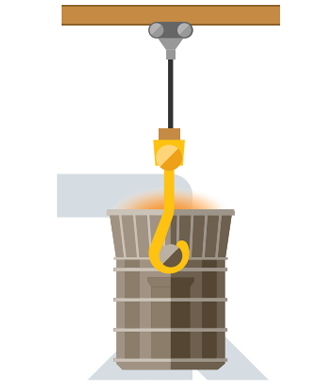
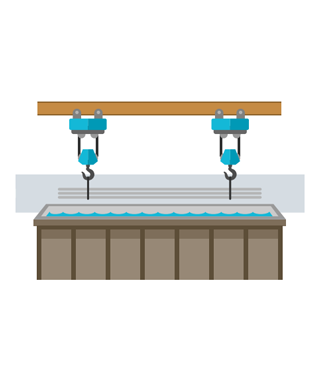
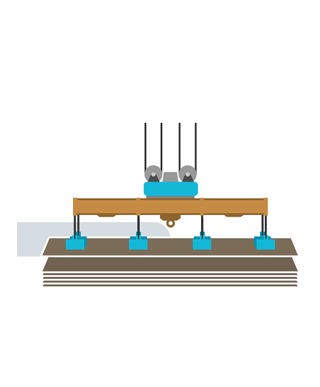
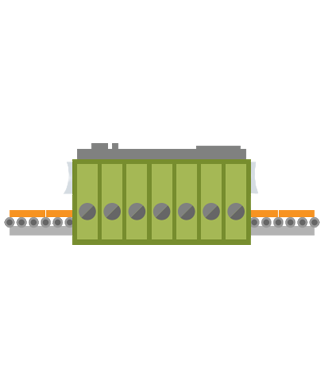
Treating hoists, variable frequency drives (VFDs), automation systems, and power delivery as separate decisions can limit performance. Facilities that see consistent gains approach material handling for metals manufacturing as coordinated architecture where lifting equipment, motion controls, and automation work together.
Integrated material handling systems in metals production support reliability, safety, and efficiency across the full production lifecycle.
Download the Steelmaking Solutions Brochure for an in‑depth look at linear motion, lifting, and automation systems engineered for metals production.
Step 1: Scrap Handling and Charge Preparation
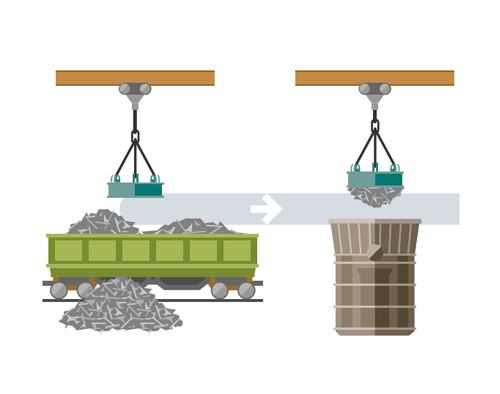
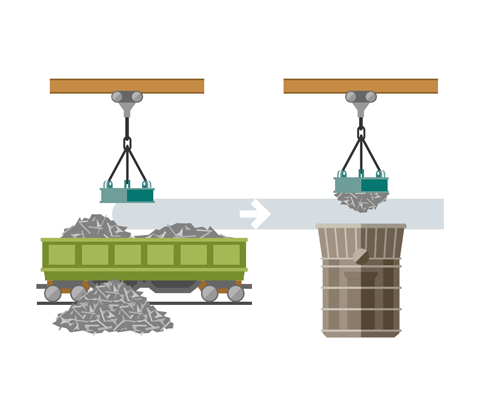
Electric arc furnace operations begin in the scrap yard as trucks and railcars deliver shredded scrap and heavy melt. Magnet cranes sort, stage, and load charge buckets. This phase sets the rhythm for furnace operations.
Magnet cranes often operate at high duty cycles and in close proximity to one another. Without coordinated controls, crane interference can slow sorting operations and disrupt scrap flow. When incoming material backs up, furnace schedules slip and production targets become harder to meet.
Digital DC magnet control systems are designed for demanding magnet crane applications. These systems monitor operating conditions and track variables such as magnet current and temperature, helping maintenance teams understand how equipment is performing. Power-loss ride-through capability helps keep the magnet energized during brief interruptions, reducing the risk of dropped loads that can damage equipment or create safety hazards.
Collision avoidance systems help manage crane spacing in shared bays by monitoring the position of nearby cranes and maintaining safe separation distances. This technology becomes essential when multiple cranes work simultaneously in confined areas.
A stable scrap flow keeps furnace schedules on track and production moving.
Step 2: Furnace Loading and Melting
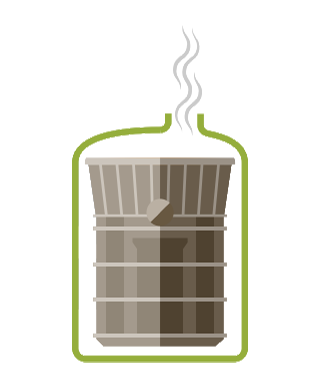
Inside the melt shop, operating conditions intensify with temperatures regularly exceeding 2,000°F. Dust and radiant heat accelerate equipment wear, while the consequences of equipment failure increase when handling material near molten metal.
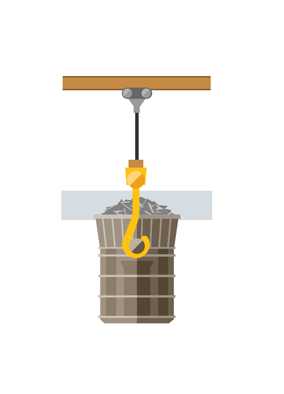
Overhead crane systems used in furnace charging must deliver smooth motion, reliable braking, and consistent performance under these conditions. Operators need equipment they can depend on when moving charge buckets sometimes weighing several tons into high-temperature environments.
Variable frequency drives regulate crane acceleration and deceleration, helping reduce structural stress caused by abrupt starts and stops. AC line regenerative systems return braking energy back to the facility power supply instead of dissipating it as heat. Heavy-duty braking systems designed for steel mill environments support consistent stopping performance even under continuous use.
Drive support and diagnostic tools provide access to alarm history, fault logs, and performance data that maintenance teams can review to understand how equipment operates over time. This visibility helps teams identify irregular patterns and plan maintenance before problems lead to unplanned downtime. Radio remote controls allow operators to position themselves away from furnace heat while maintaining precise crane control.
Improved visibility and controlled motion help protect both equipment and personnel while maintaining the demanding schedules of melt shop operations.
Step 3: Liquid Metal Transportation
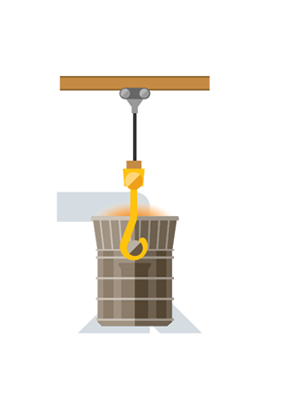
Once molten, metal must move safely between refining, degassing, and casting operations. This stage includes secondary steelmaking processes where elements are added to refine metal composition. Ladle cranes often operate in shared bays where coordination is critical, since load sway, bridge skew, or uncontrolled proximity between cranes can introduce structural stress and safety risk.
Transporting liquid metal at temperatures often exceeding 2,000°F and, in some processes, approaching higher temperatures depending on the application, leaves little room for error. Uncontrolled load movement can create safety hazards or disrupt production flow. When multiple ladle cranes share the same bay, this risk increases.
Crane-specific variable frequency drives deliver smooth, controlled motion during bridge and trolley travel. Embedded sway control software can reduce pendulum movement during travel, helping stabilize loads and improve placement consistency. This matters particularly when operators must position ladles precisely at refining stations or transfer points.
Anti-skew protection helps maintain bridge alignment under uneven loading conditions. Collision avoidance systems assist in maintaining safe crane separation in congested bays, automatically managing spacing between cranes operating simultaneously.
These technologies help operators maintain safe, controlled transfers during complex material handling operations.
Step 4: Slag Handling
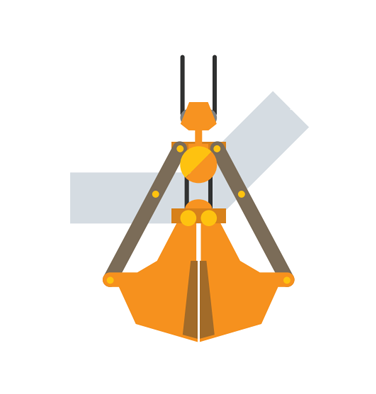
Slag handling occurs throughout the melting and refining process as impurities separate from molten metal. These operations often involve repetitive material movements that benefit from automation.
Pre-programmed crane motion sequences can support repeatable positioning cycles for slag pot handling. No-fly zone programming is able to restrict crane movement into designated areas where other equipment or maintenance work may occur. Off-center pick detection systems alert operators when loads are not balanced correctly, helping prevent side-pull conditions that can place stress on crane structures.
These controls help maintain consistent handling practices while supporting safer operations during routine slag removal.
Step 5: Casting, Molds, and Pouring Stations
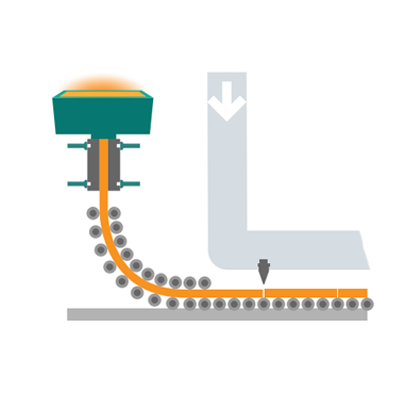
Casting marks the transition from liquid metal to solid form. Whether through continuous casting in integrated mills or batch casting in foundries, this process requires precise positioning. At pouring stations, operators control crane movements to deliver molten metal into molds with accuracy that prevents spillage and ensures quality.
Continuous Casting
Continuous casting machines produce slabs, blooms, and billets in a continuous process. Positioning of tundishes and strand components influences final product dimensions, making motion control essential.
Screw jacks and linear actuators provide repeatable adjustment capability and self-locking features that prevent unintended movement during power interruptions. Rotary unions maintain coolant flow through rotating rollers along the casting strand. Synchronized screw jack systems help maintain consistent roller gap settings that influence product thickness and dimensional consistency.
Reliable motion control at this stage supports downstream processing quality by ensuring dimensional accuracy from the start.
Sand and Aluminum Casting
Foundry environments operate at smaller scales but require similar precision. Overhead cranes handle mold positioning, ladle transfers, and casting removal. The equipment must engage molds and flasks safely while operators maintain control during pouring operations.
Electric wire rope hoists and powered chain hoists support mold positioning, ladle transfer, and casting removal. Below-the-hook lifting devices help engage loads safely while reducing the need for manual rigging in high-temperature areas. Jib cranes support workstation flexibility in areas where overhead coverage is limited. Pendant pushbutton stations and radio remote controls provide responsive positioning control in tighter foundry layouts.
Predictable lifting supports product quality and worker safety across foundry operations.
Step 6: Hot and Cold Rolling
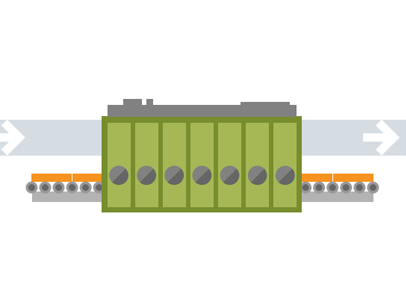
Rolling mills operate continuously under significant mechanical stress as metal passes through multiple rolling stages. Motion control systems influence throughput, dimensional consistency, and surface quality during these processes. Small variations in roller positioning or load handling can affect final product specifications.
Variable frequency drives regulate bridge, trolley, and hoist motions with smooth acceleration profiles that prevent sudden load movements. Sway control stabilizes loads during travel. Off-center pick detection alerts operators before misaligned lifts place uneven stress on crane components.
Within the rolling system, synchronized screw jacks adjust roller gaps under high force with fine, repeatable accuracy. Rotary unions maintain continuous coolant flow through work rolls during operation. These components work together to help maintain the consistent conditions needed for quality rolled products.
Consistent motion control helps support stable production conditions and dimensional accuracy.
Step 7: Processing and Material Handling
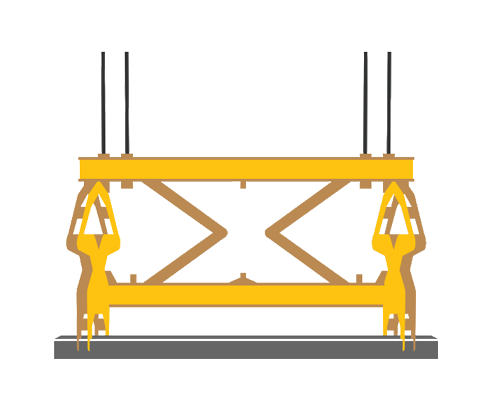
After rolling, material must be staged for further processing or shipment. This step involves handling blooms, billets, slabs, plates, and coils. Each material type presents distinct handling challenges based on size, weight, and geometry.
Coil Handling Solutions
Coils represent significant material value, making careful handling essential. Edge damage affects usability, while surface defects can lead to customer rejections.
Coil handling solutions typically combine specialized coil grabs designed for inner or outer diameter engagement with electric wire rope hoists equipped with variable frequency drive control. Controlled acceleration and deceleration help support smooth lift-off, travel, and placement. This precision helps protect coil edges and surfaces during transfers.
Plate, Billet, and Slab Handling Equipment
Plate, billet, and slab handling require different approaches, but each depends on stable, well-controlled lifting to maintain product quality and keep material moving through the process.
Plate handling equipment distributes load weight across wide surfaces to reduce deflection during lifting. Lifting beams and spreader bars help balance loads across multiple pickup points, while magnetic or vacuum lifting systems may be used depending on material thickness and surface requirements.
Billets and slabs introduce a different challenge. These materials are often handled while still hot and require crane systems capable of both high capacity and precise positioning. Bar and tube handling equipment commonly uses C-hooks, tong-style grabs, or bundling devices that help maintain load stability during transfer.
Across these applications, consistent positioning and controlled motion help prevent product damage and avoid delays that can disrupt downstream processing or shipment schedules.
Step 8: Surface Treatment, Inspection, and Packaging
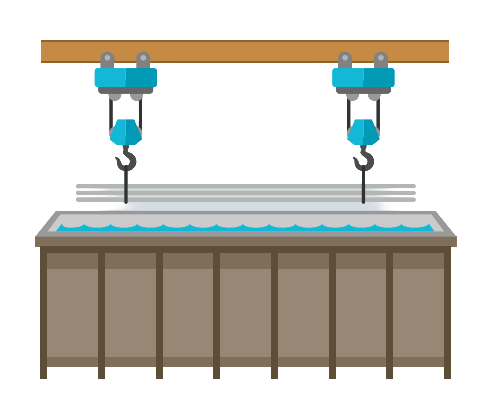
Surface treatment processes, such as galvanizing or coating, are used to protect metal from corrosion and improve product durability. In dip tank operations, material is immersed in chemical or molten baths for controlled periods to achieve the desired coating.
Dip tank operations require controlled immersion timing to maintain coating consistency. Variations in timing or positioning can lead to uneven coatings, resulting in quality issues that require rework or delay shipment.
Automated crane controls can execute pre-programmed travel paths that help maintain repeatable immersion cycles and support process consistency. For manual processes, pendant control stations rated for harsh environments provide reliable operation in areas with moisture and chemical exposure. Radio remote controls allow operators to maintain safe distances from treatment tanks while maintaining clear visibility of loads.
Inspection and packaging represent the final stages before shipment. Equipment reliability at this point directly effects on-time delivery and customer satisfaction. Reliable lifting equipment supports careful positioning during inspection and controlled handling during packaging to prevent damage that could delay shipments.
Step 9: Storage and Maintenance
Storage bays and maintenance shops present their own operational challenges that can affect overall facility performance.
Storage cranes often travel longer distances than production cranes. When multiple cranes share extended runways, collision avoidance systems help maintain safe spacing even when operator sightlines are limited. Conductor bar systems and cable reels support consistent power delivery across long travel spans, helping prevent unexpected stops during handling operations.
In maintenance areas, jib cranes and powered chain hoists provide precise positioning in confined spaces. Variable speed electric chain hoists support controlled component alignment during repair or installation. Workstation lifting for metal fabrication in maintenance shops relies on equipment designed to fit restricted areas while maintaining adequate reach and capacity.
Conveyance solutions also support maintenance and production workflows by moving components and materials between workstations. Conveyor systems help reduce manual handling, improve process flow, and support consistent movement of parts through inspection, repair, or assembly operations.
Efficient maintenance operations help reduce facility-wide downtime by enabling faster equipment repairs and component replacements.
Discover how Columbus McKinnon technologies connect
end‑to‑end across the production lifecycle.
Visit the Interactive Steelmaking Page
Frequently Asked Questions
-
How do metal manufacturers handle heavy materials safely?
Safe material handling combines engineered lifting equipment, intelligent controls, and operator training. Variable frequency drives help reduce abrupt motion that can cause load sway. Collision avoidance systems help prevent crane interference. Specialized below-the-hook lifting devices help ensure secure load engagement for specific materials. Remote monitoring provides maintenance teams with performance data that supports proactive equipment service.
-
What are common material handling challenges in metals manufacturing plants?
Common challenges include managing cranes in shared operating areas, maintaining equipment performance in extreme heat, preventing unplanned downtime during high-duty cycles, and achieving precise positioning for critical processes such as tundish adjustment and coil placement. Metal processing material handling must also address dust, moisture, and the weight of materials being moved.
-
What equipment is used to move metal coils in manufacturing?
Metal coil lifting systems typically combine electric wire rope hoists with variable frequency drive control, specialized coil grabs designed for inner or outer diameter engagement, and overhead crane systems equipped with sway control for stable positioning. Controlled acceleration prevents edge damage during lift-off and placement.
-
How do overhead lifting systems improve metal fabrication efficiency?
Overhead lifting systems support faster and more controlled material movement compared to manual handling. Pre-programmed crane motion sequences can assist with repeatable transfers, while diagnostic tools help maintenance teams identify developing equipment issues. This combination reduces delays and supports consistent production flow.
-
Can crane control systems be monitored remotely in a metals facility?
Yes. Columbus McKinnon drive support and diagnostic tools provide access to alarm history, fault logs, and operating data that help maintenance teams understand how crane systems are performing. Reviewing this information can help identify developing issues and support maintenance planning.
Coordinated Motion Across the Full Production Lifecycle
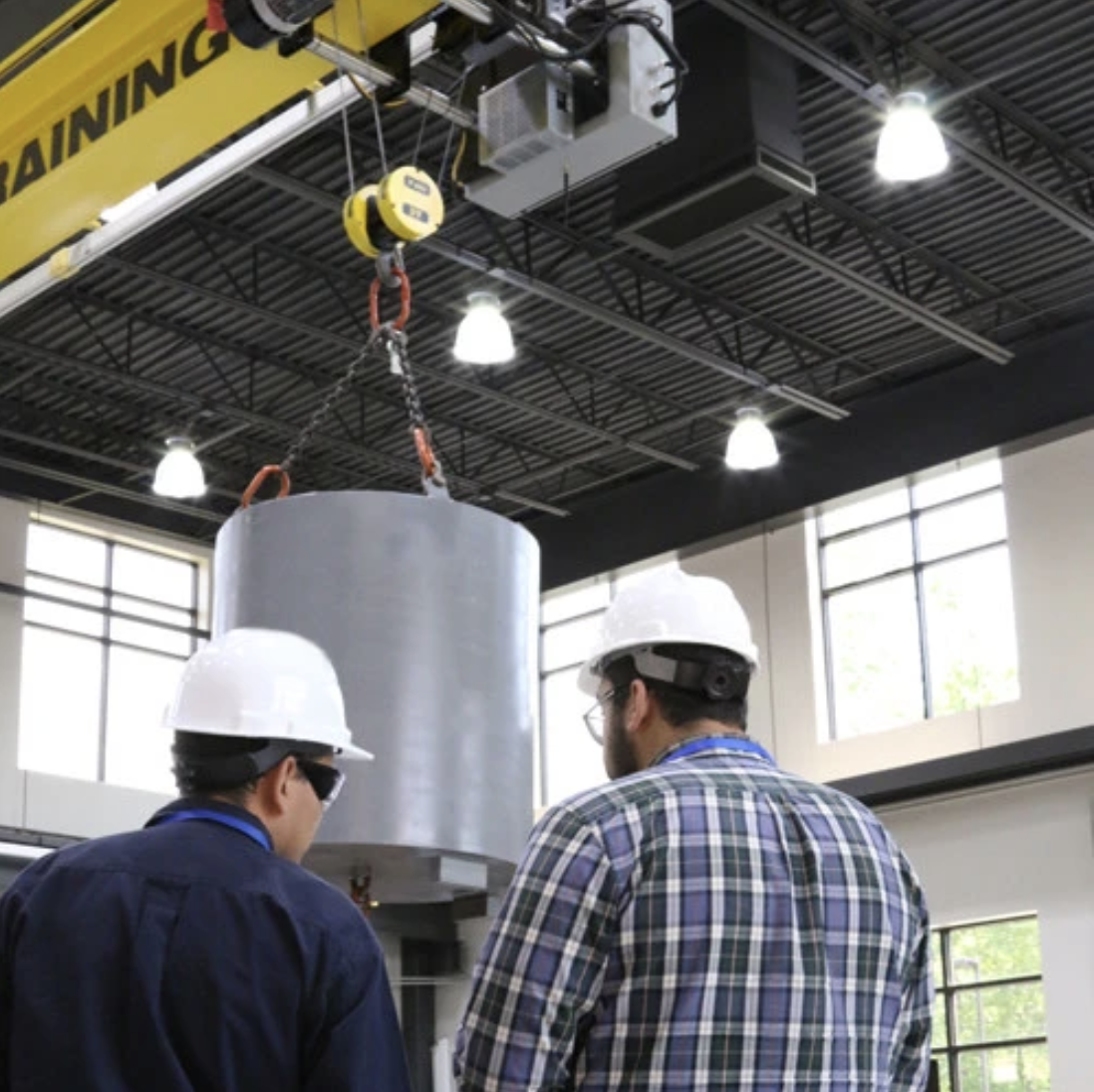 Metals manufacturing includes dozens of lifting and positioning points. Addressing them independently limits operational improvement.
Columbus McKinnon integrates lifting equipment, automation systems, linear motion control, and conveyance technologies into coordinated solutions designed to work together across the production lifecycle. From scrap handling through final packaging, steel manufacturing material handling benefits from systems engineered to communicate and operate as a unified whole.
When implemented strategically, integrated systems can help reduce crane interference, improve maintenance visibility, stabilize production flow, and support consistent product handling. Each component contributes to overall facility performance.
Every facility's approach is different. Some begin with control system upgrades. Others expand automation or focus on predictive maintenance strategies. The path depends on current equipment, operational priorities, and production goals.
The objective remains the same: coordinated motion from scrap yard to finished product.
Columbus McKinnon's 150 years of experience in demanding industrial environments provides the foundation for solutions designed to perform under heat, heavy load, and continuous duty. In metals manufacturing, unplanned equipment failure carries serious consequences, making reliability and visibility essential.

Interested in guidance on system upgrades,
automation paths, or custom project support?
No pressure!